|
The United Transportation
Union We are the
United Transportation Union (UTU),
headquartered in North Olmsted, Ohio. We are a broad-based,
transportation labor union representing about 125,000 active and
retired railroad, bus and mass transit workers in the United
States and Canada.
With offices in Cleveland and
Washington, D.C., the UTU is the largest railroad operating
union in North America, with more than 500 locals. The UTU
represents employees on every Class 1 railroad, as well as
employees on many regional and shortline railroads. It also
represents bus and mass transit employees on approximately 45
bus and transit systems
and has recently grown to include airline pilots,
dispatchers and other airport personnel.
Membership is drawn primarily from the
operating crafts in the railroad industry and includes
conductors, brakemen, switchmen, ground service personnel,
locomotive engineers, hostlers and workers in associated crafts.
More than 1,800 railroad yardmasters also are represented by the
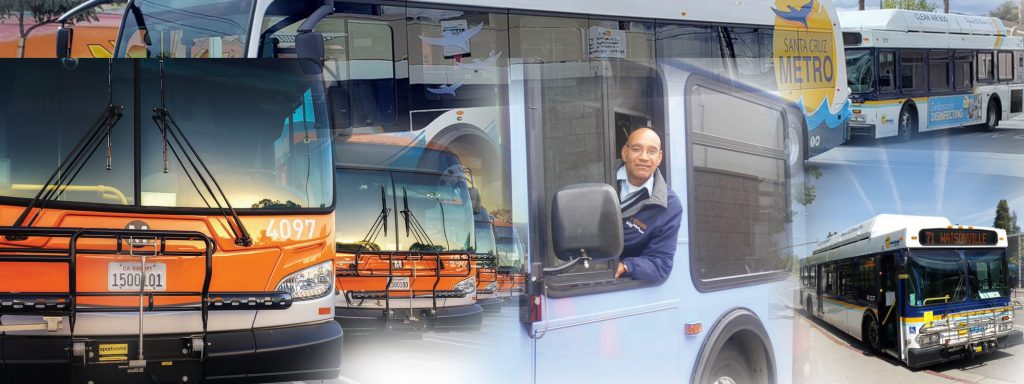
the UTU. The UTU's 8,000 bus and
transit members include drivers, mechanics and employees in
related occupations.
Widely recognized as the leader among
transportation labor unions, the UTU sets the pace in national
and state legislative activity, collective bargaining, and in
efforts to improve safety and working conditions on the
railroads and in the bus, transit and airline industries. Through
experienced representation and its legislative strength, the UTU
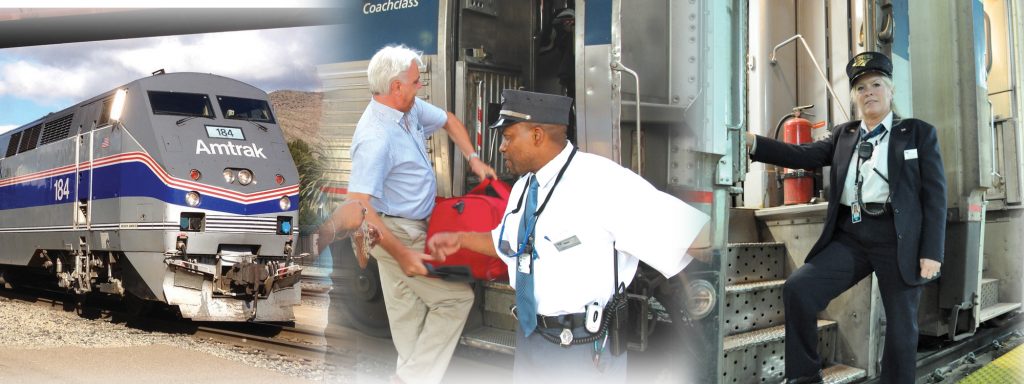
has been instrumental in the preservation of Amtrak (the national
rail passenger network),
the enactment of numerous safety laws and the promotion of
employee assistance programs.
The UTU has been successful in the past and
continues to strive for progressive and innovative contracts
that ensure excellent wages and benefits and a healthy pension
system for the railroad, bus, mass transit and airline employees
who have devoted their lives to service those industries.
The UTU also continues to lead in efforts to
combat drug and alcohol abuse among its members, in the
promotion of mass transit and an efficient rail passenger
service, and in protecting its members and the public from the
unsafe shipment of hazardous materials.
History of the United Transportation Union
In 1968 exploratory talks among the four
brotherhoods’ interested in forming one transportation union
proved fruitful and plans were formulated for merging of the
four operation unions into a single organization to represent
all four operating crafts.
In August of 1968, the union presidents
announced that after nine months of planning, a tentative
agreement had been reached on all phases of unity. It was
further announced that the name of the new organization would be
the United Transportation Union and the target date for
establishing the UTU was Jan. 1, 1969.
In Chicago on Dec. 10, 1968, the tabulation of
the voting revealed an overwhelming desire by the members of the
four crafts to merge into a single union, and the United
Transportation Union came into existence on Jan. 1,
1969.
Brotherhood of Railroad Trainmen
The Brotherhood of Railroad Trainmen, largest
of the UTU’s predecessor unions, was founded in June of 1883 at
Oneonta, N.Y., when eight brakemen crowded into D&H caboose
No. 10 to change rail labor history.
At the time, rail workers earned a little more
than $1.00 a day working one of the most dangerous jobs. An
estimated 70 percent of all train crews could expect injury within five
years. Realizing that passing the hat whenever a co-worker died
was ineffective, rail workers formed a brotherhood to provide a
benefit in case of death, at the time $300.00.
Begun as the Brotherhood of Railroad Brakemen,
the BRT in 1889 changed its name to reflect its expansion into
other crafts, with membership reaching out to include rail
workers in 14 different trade classifications. Later, in 1933,
the BRT organized interstate bus operators.
Brotherhood of Locomotive Firemen and Enginemen
Lodge No. 1 of the Brotherhood of Locomotive
Firemen was organized by Joshua Leach and 10 Erie Railroad
firemen at Port Jervis, N.Y., in 1873. The following year,
delegates from 12 lodges met and formed the “BLF Insurance
Association” to provide sickness and funeral benefits for
locomotive firemen.
In 1906, BLF changed its name to Brotherhood
of Locomotive Firemen and Enginemen and joined in bargaining
with the three other major railway unions.
In 1919, with 116,990 members, the BLF&E led
the fight for an eight-hour day for rail workers, and in 1926
pressed successfully for passage of the Railway Labor Act.
Switchmen's
Union of North America
In 1870, switchmen employed on railroads in
the Chicago area worked 12 hours a day, seven days a week, for
$50.00. Helpless in bargaining with their employers
individually, they banded together in August of that year to
form the Switchmen’s Association.
In 1886, switchmen met in Chicago and formed
the Switchmen’s Mutual Aid Association, but a lockout on the
Chicago Northwestern Railroad and a disastrous strike in 1888 on
the Chicago, Burlington and Quincy Railroad ended the
Association in July 1894. Later that year, however, a meeting in
Kansas City, Mo., led to the establishment of the
Switchmen’s Union of North America.
Order of Railway Conductors and Brakemen
In the spring of 1868, T. J. “Tommie” Wright
and a small band of Illinois Central Gulf conductors formed the
first conductors’ union, known as “Division Number 1 Conductors’
Brotherhood” at Amboy, Illinois. Word spread quickly, and by
November 1868, the union’s first convention was held in
Columbus, Ohio, where conductors from the U.S. and Canada
adopted the name “Order of Railway Conductors of America.”
In 1885, the ORC directed its leaders to aid
in negotiating agreements with carriers, a revolutionary idea
for the time. In 1890, the ORC adopted a strike clause and began
a militant policy of fighting for the welfare of conductors.
In 1942, the Order of Sleeping Car Conductors
amalgamated with the ORC, and in 1954 the organization was
renamed the Order of Railroad Conductors and Brakemen to reflect
its diverse membership.
International Association of Railroad Employees
Historically, exclusion and segregation
characterized nearly every aspect of the lives of
African-Americans, including their participation as members of
organized rail labor. The International Association of Railroad
Employees arose in response to this set of circumstances.
Among those represented by the IARE were
conductors, trainmen, engineers, shop mechanics, porters and
maintenance-of-way employees who, effective Sept. 1, 1970,
found themselves welcomed into the fold of the nascent United
Transportation Union.
Railroad Yardmasters of America
The Railroad Yardmasters of America (RYA), organized Dec. 2,
1918, in response to managerial abuses. The RYA voted in 1985 to
affiliate with the UTU.
UTU-represented yardmasters today enjoy autonomy and craft
preservation, as well as the protective advantages and strength
associated with UTU membership.
|